Some Whitney Biennial thoughts
And a defense of Chappell Roan.

I’ve always admired the critic Hilton Al’s towering intellect and grasp of art and literary history, but after trying to read White Girls, his book of confoundingly dense essays, I realized that his editors at The New Yorker must reshape his sentences for the magazine. Even with the leavened language, a harsh esotericism sometimes remains. That’s at least how I felt reading his critique of the Whitney Biennial. The way his mind triangulates influence feels stifling. He reduces the exhibition to “ChatGPT art—facsimiles of facsimiles by makers who have little if any relationship to what they’re putting out there, aside from its being a product in service of a career” and “synonymous with a desire for capital.” In other words, he argues, the exhibition mirrors our increasingly commodified and decontextualized world, where artists blithely squeeze their unique human imaginations into marketable products.
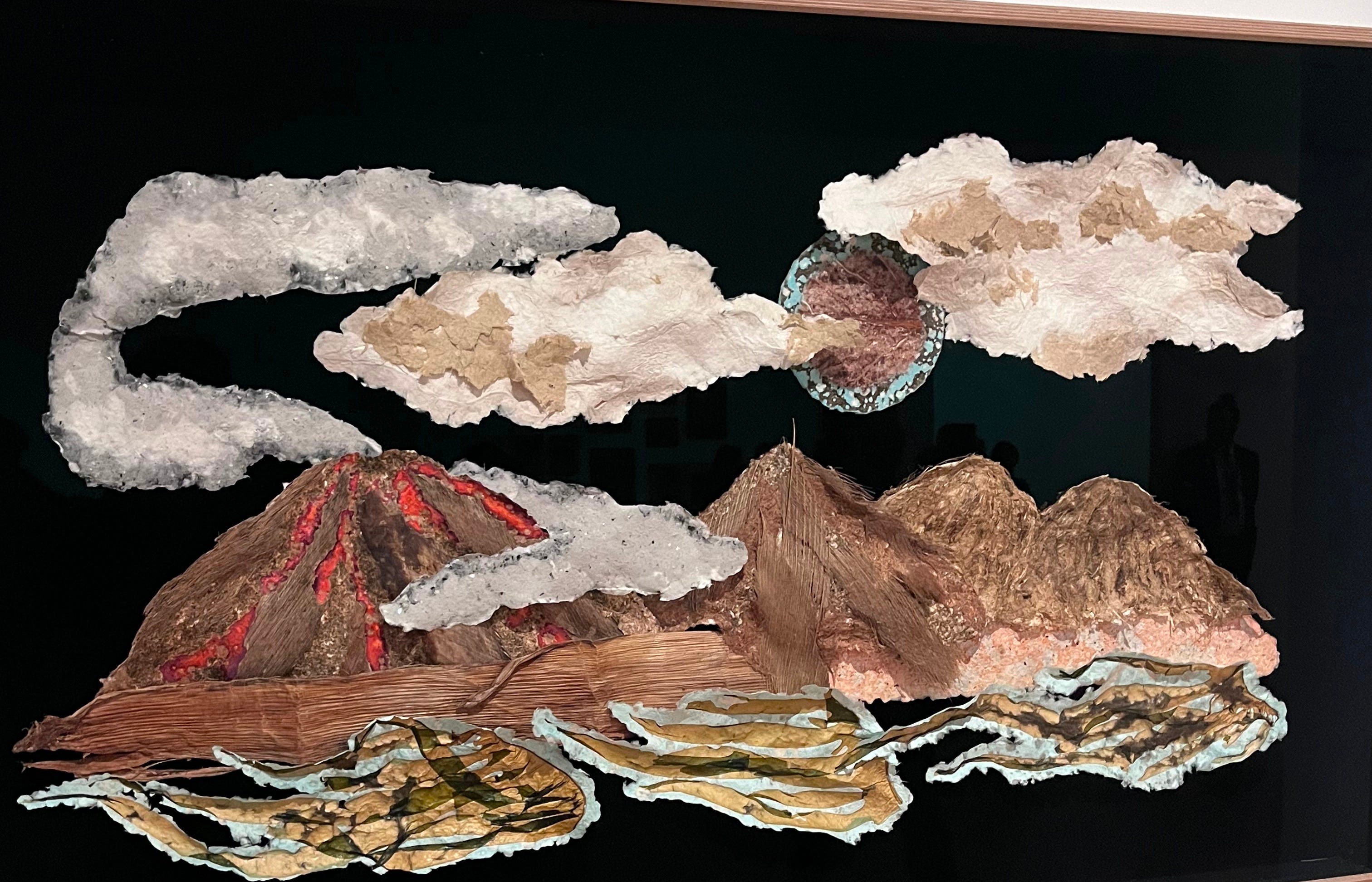
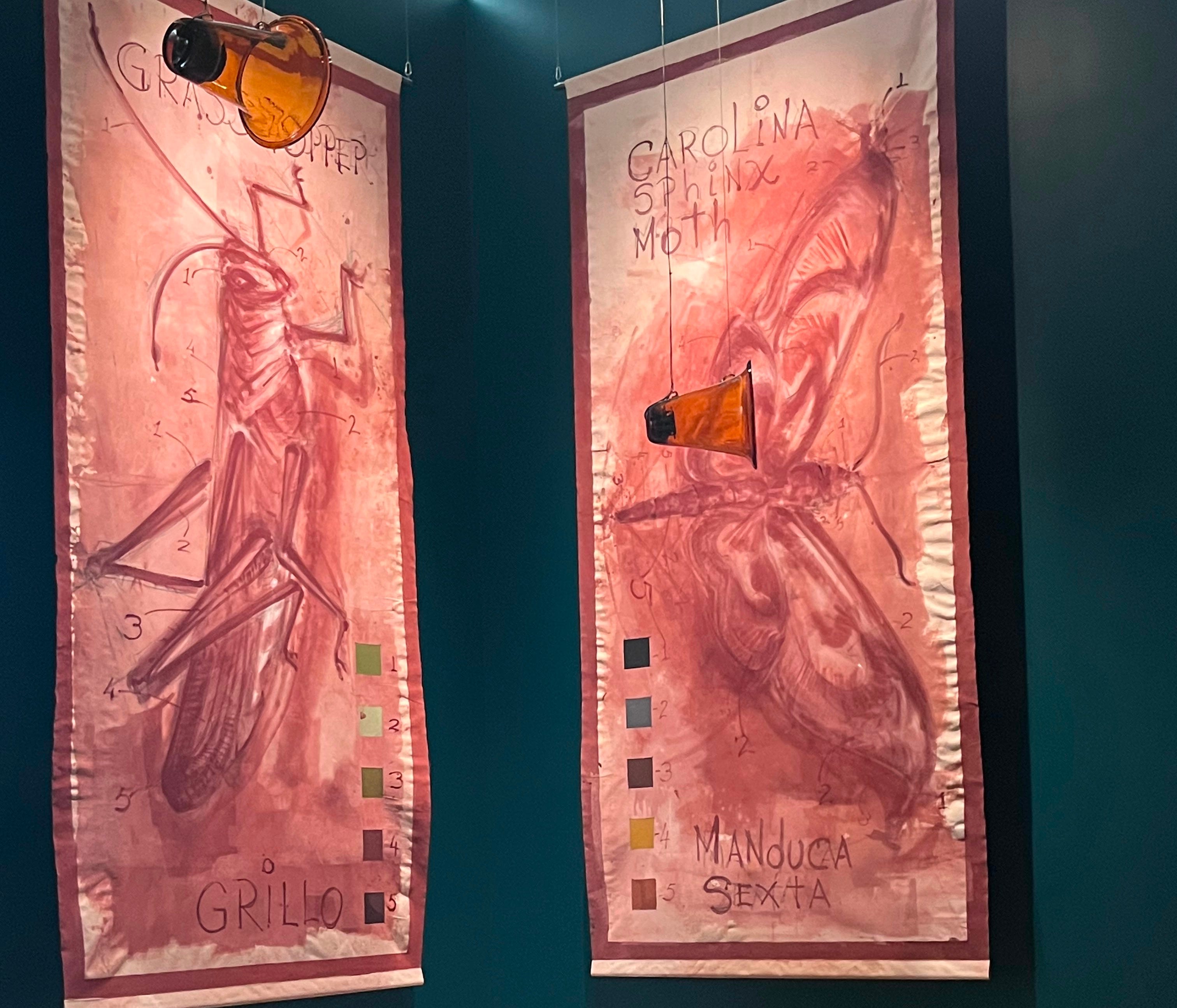
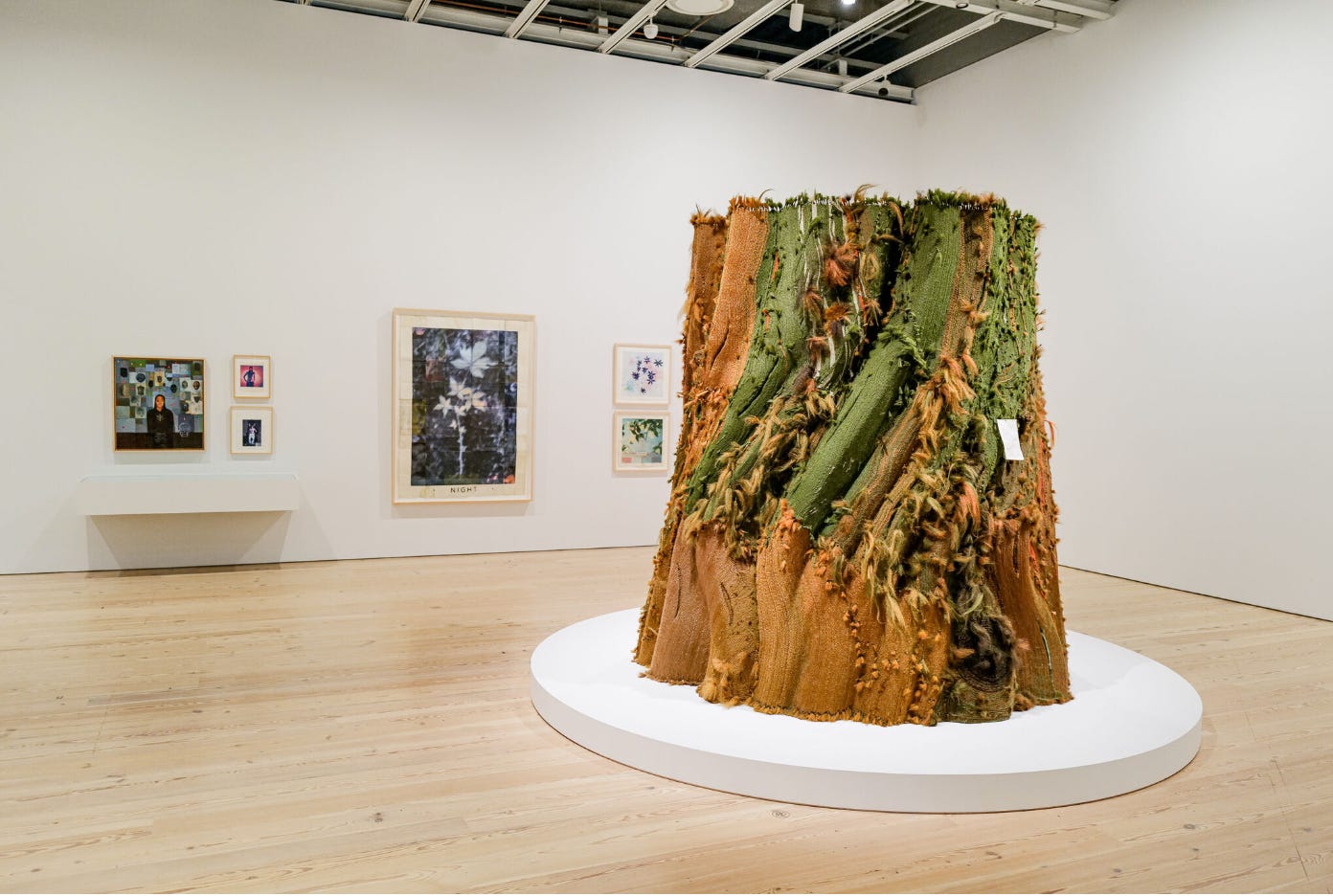
I had a less cynical experience walking through the Biennial. I kept thinking that this was a bracing depiction of a post-commodity world. What remains when aquifers whisper dearth, when the air, like a plastic bag, suffocates? There’s a distinct emphasis on tactile, textural arts, particularly knitting, collaging, sketching, and found-junk assembly. There are dirty plastic inflatables, odd-alien technologies, vanquished worlds, moving ofrendas, and soft renderings of nature, like Malcolm Peacock’s massive knitted redwood sculpture that feels like a defense of playfulness, slightly undercut by pages of heavy text attached to the surface.
Two of the video installations were particularly harrowing. In one, a projection of washed-out and color-contrasted scenes from blasted Palestine play against walls and painted structures, as brief, bullet-blunt words of despair and hope float by. In another, right outside the elevator banks, an orb descends from the ceiling emitting a droning, grating ambience. You’re invited to sit on the floor and gaze up at the orb, within which wrapper scraps, news clippings, and patriotic symbols scatter and dance, blown by some wind machine, against a vast and pristine blue sky.
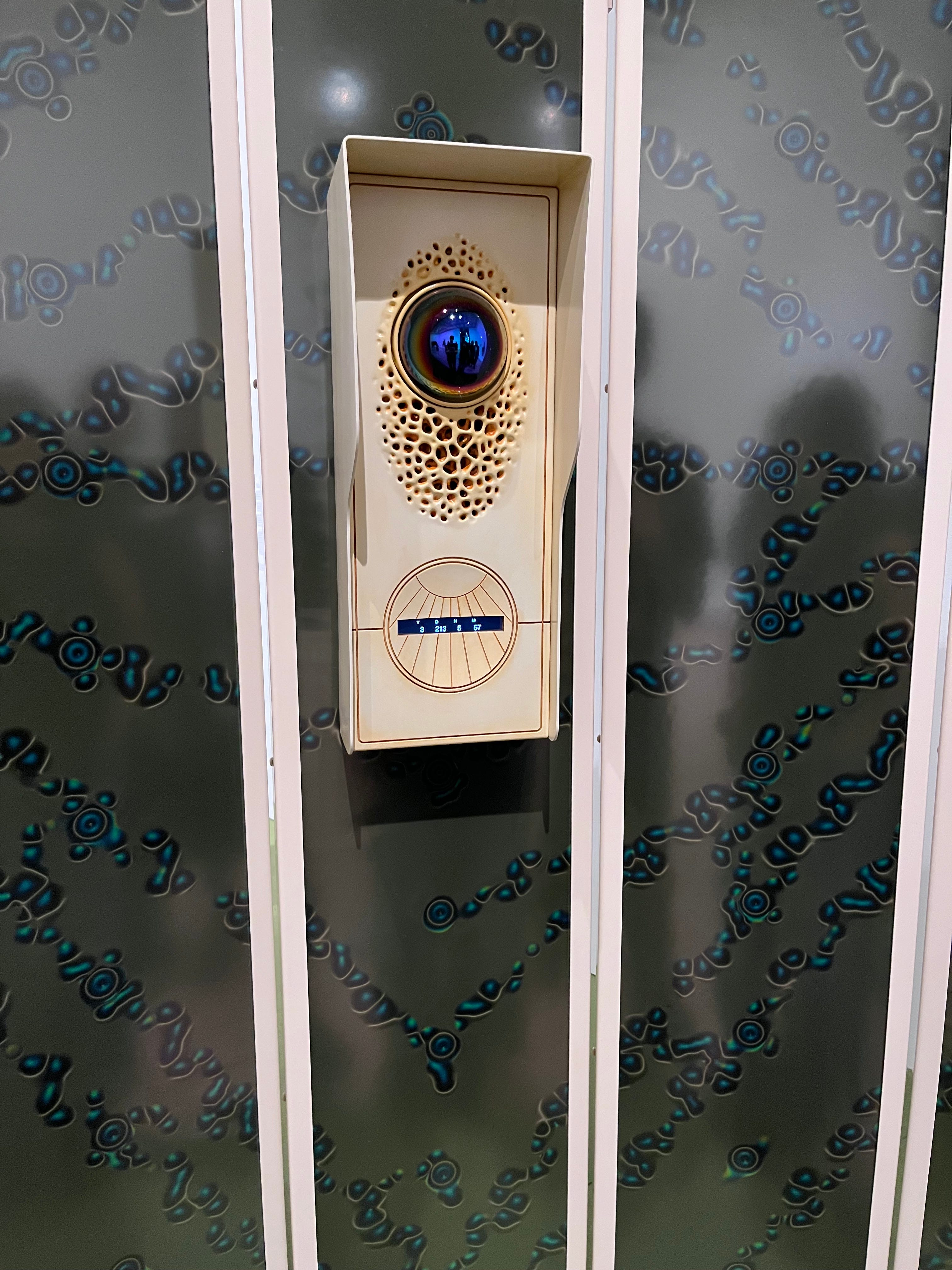
Elsewhere, the orb theme—mystery, consciousness, the universe—could be seen in what looked like an alien apartment intercom. Instead of apartment numbers, a display counts the year, month, day, and minute since the death of the person whose voice emanates. As you move into the orb’s view, the voice shares a disjointed memory.
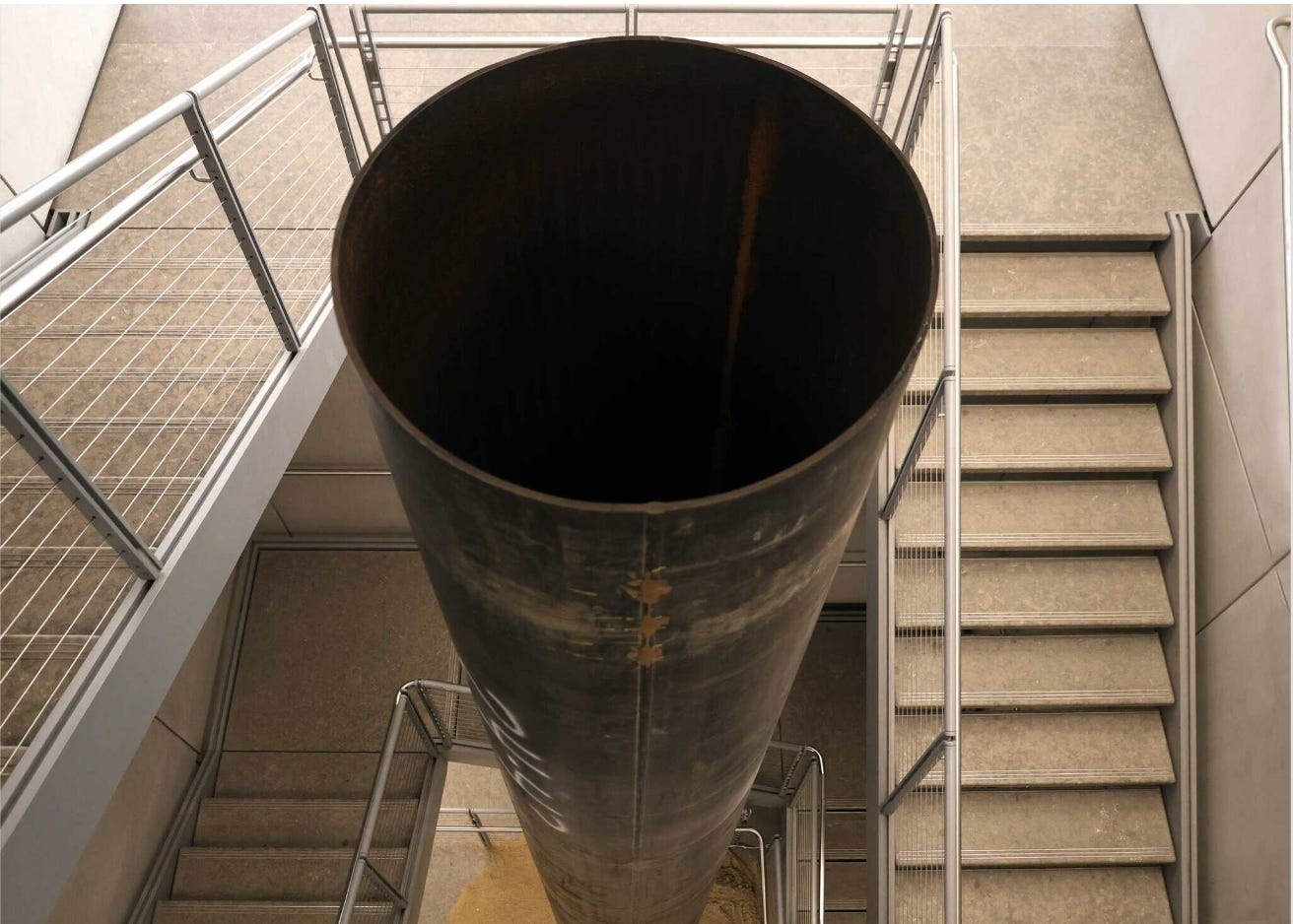
In the central stairwell, a fracking tube protrudes upward as we hear an aural interpretation of methane silently leaking into the atmosphere. Methane traps more heat than carbon and can now be more liberally freed from deep in the Earth thanks to the gutting of the EPA.
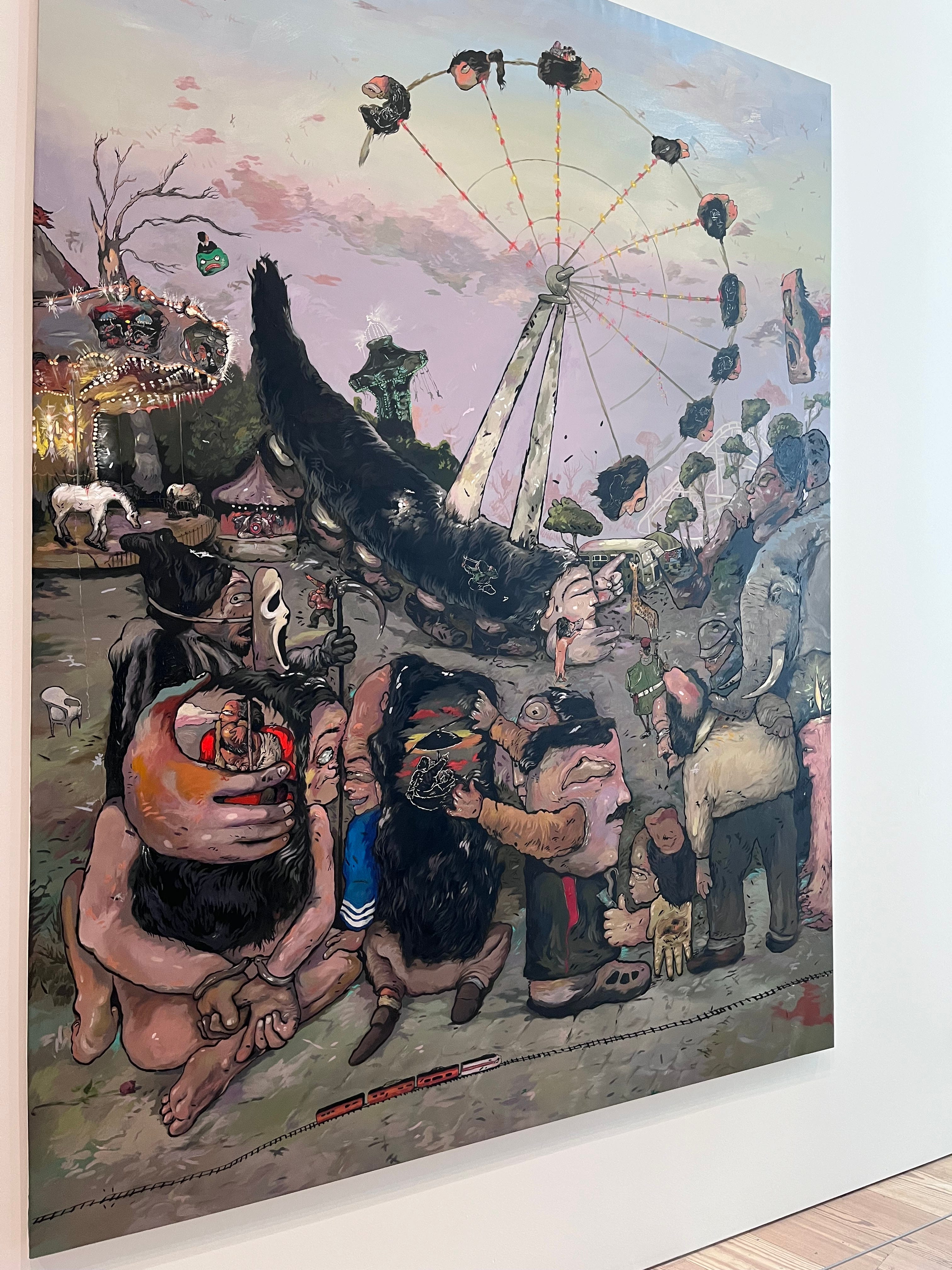
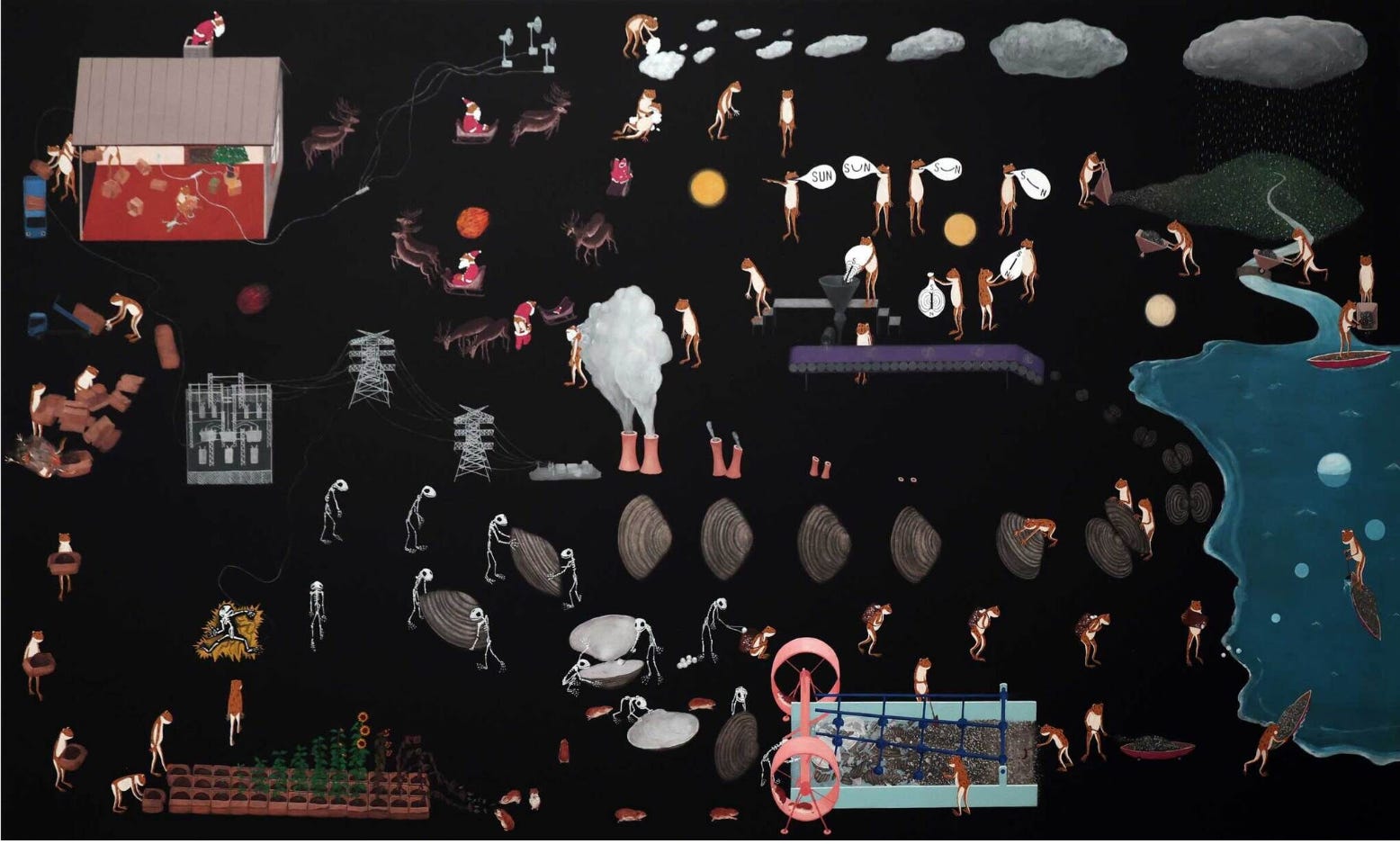
The artist that I spent the most time with was Akira Ikezoe. He paints these delightfully weird and busy worlds, a much more pleasant Hieronymous Bosch. In his three pieces on display, creatures are monomaniacally devoted to continuing the order of things, generating energy to use energy. In my favorite visual detail, frogs stand around looking at a sun. Speech bubbles reading “sun” gradually break down into raw materials that get poured into a funnel. It’s very fun and weird, very adult swim, as it renders the absurdity of our too-close-to-the-screen existence.
I left the exhibit feeling strangely uplifted. It was refreshing to see artists not unbothered by the present moment—its constant dread and upheaval—but unwilling to let it dominate their horizons. The future hasn’t been written yet, so, the artists seem to be saying, learn how to knit, make your own energy, befriend insects, and listen to the patterns of the wind.
Britney Spearzing yet another celebrity
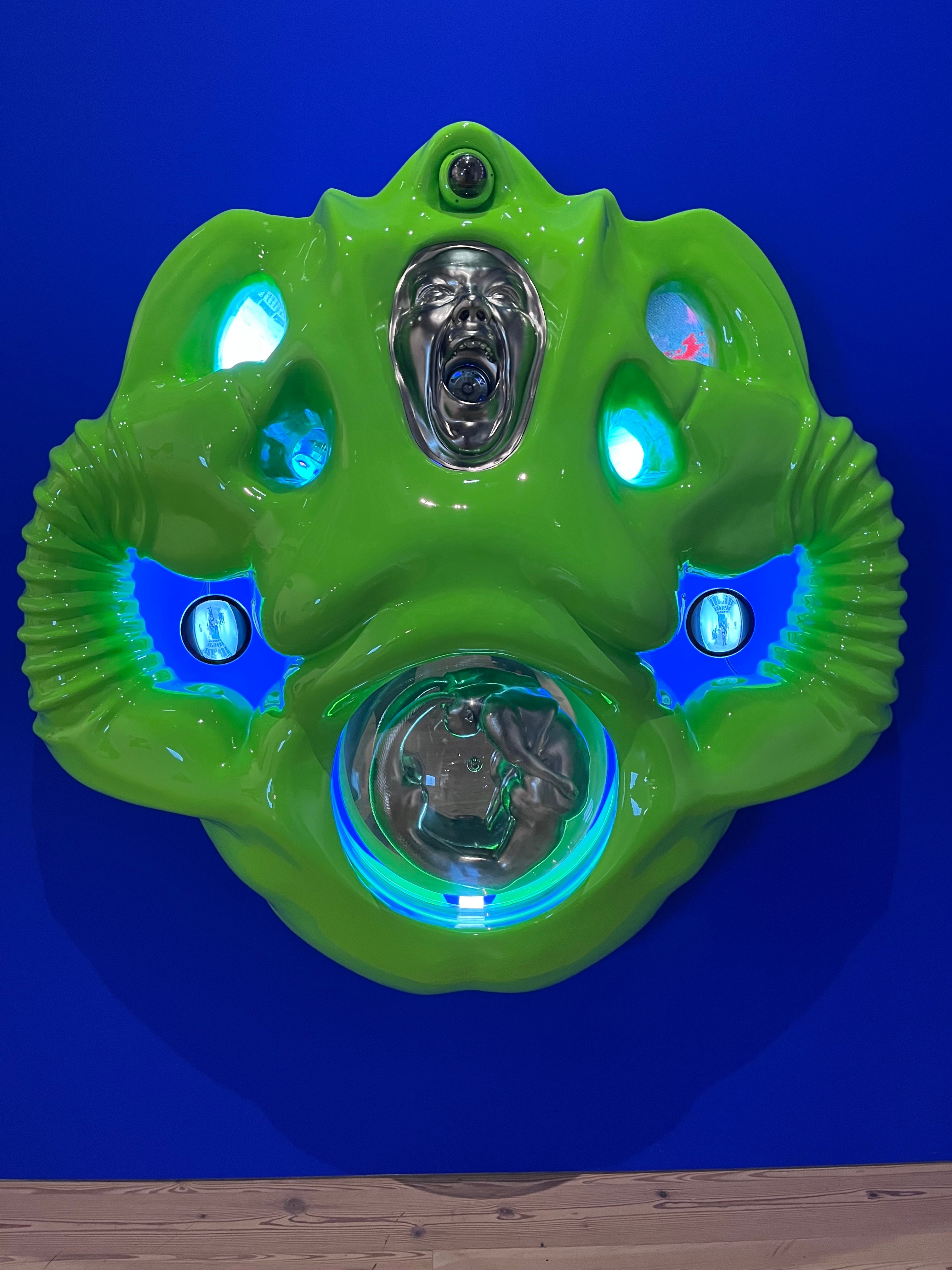
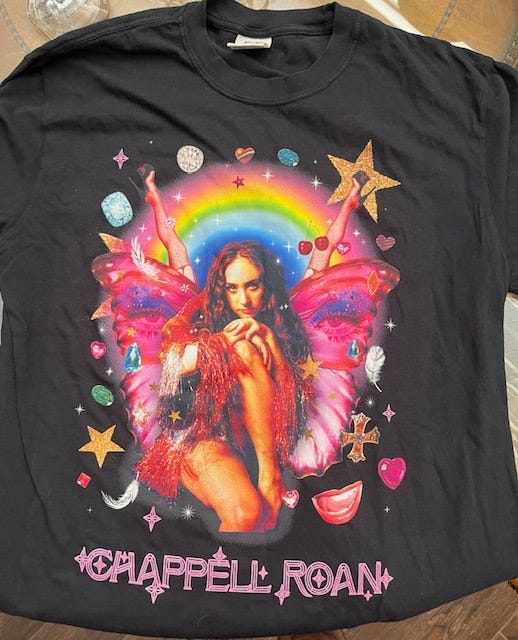
As I was looking at a garish green blob of sleek surveillance tech, someone nearby noted the similarity to the movie The Substance. Earlier that morning, I had considered wearing my The Substance t-shirt, but decided it was too loud. Instead, I wore my slightly-less-loud Chappell Roan t-shirt, a confection of joy, unaware that she was embroiled in a viral controversy around fan-interaction etiquette. It sounded like just another contrived misogynistic scandal to drag a female artist and, the more I learn about it, the more that seems to be the case. Chappell, after all, has made powerful enemies by calling out the music industry’s predatory practices, leaving her label following Epstein revelations, standing steadfast in her values, and denouncing the paparazzi. It seems plausible that bitter titans of media would puff-up non-stories, slant narratives, and skew algorithms to smear her.
Well, anyways, I’ll keep dissenting through merch.
"The future hasn’t been written yet, so, the artists seem to be saying, learn how to knit, make your own energy, befriend insects, and listen to the patterns of the wind." *sob*